

Tallow Cream for Eczema
-
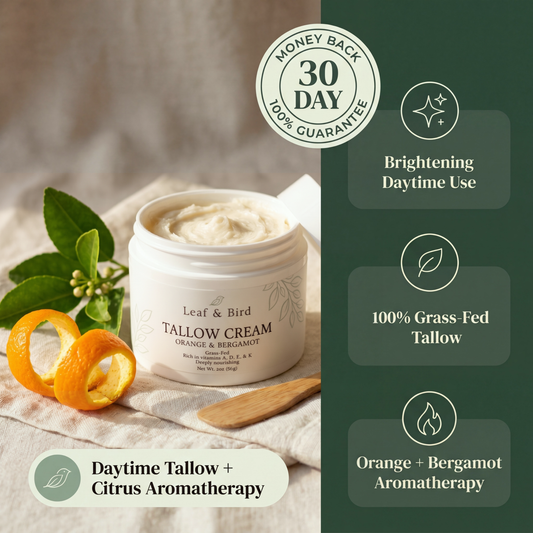
Grass-Fed Tallow Cream: Orange & Bergamot
Regular price $27.00 USDRegular priceUnit price per -
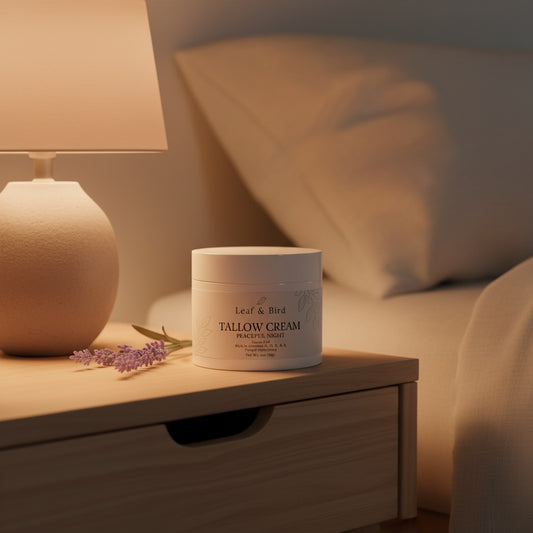
Grass-Fed Tallow Cream: Peaceful Night
Regular price $27.00 USDRegular priceUnit price per -
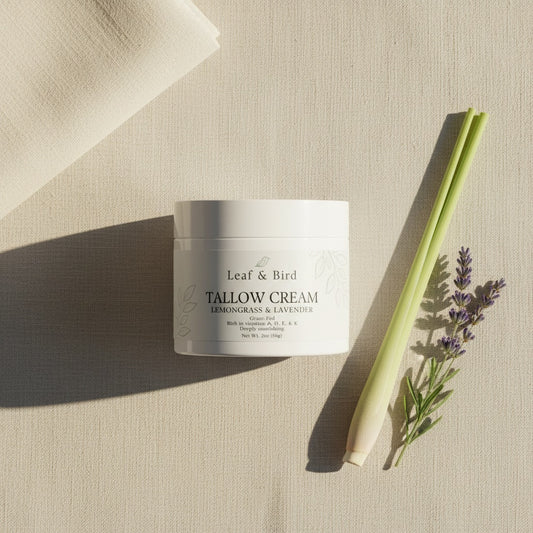
Grass-Fed Tallow Cream: Lemongrass & Lavender
Regular price $27.00 USDRegular priceUnit price per



Understanding eczema-prone skin
What barrier dysfunction actually means
Healthy skin maintains a protective barrier, the stratum corneum, that regulates moisture loss and keeps irritants out. In eczema-prone skin, this barrier is structurally compromised: gaps in the lipid matrix between skin cells allow water to escape (transepidermal water loss) and allergens or microbes to penetrate. This isn’t a surface dryness problem that more water-based lotion solves. It’s a structural deficit in the lipid layer itself. Effective moisturising for eczema-prone skin needs to address that lipid gap, which means the type of fat in your moisturiser matters as much as how much of it you apply.
The inflammation loop
Barrier dysfunction and inflammation reinforce each other in eczema. A compromised barrier allows irritants through; those irritants trigger an immune response; inflammation further damages barrier integrity, allowing more irritants in. Breaking that loop requires both reducing inflammation triggers in your environment and supporting the structural repair of the barrier itself. Moisturisation is part of the repair side, but only when the moisturiser isn’t introducing new triggers. Many conventional moisturisers contain synthetic fragrance, surfactants, emulsifiers, or preservatives that are themselves common eczema irritants, effectively adding fuel to the cycle while appearing to address it.
Ingredients that worsen flare-ups
The most common irritants found in standard moisturisers that can trigger or worsen eczema flare-ups include: synthetic fragrance (the single most reported contact sensitiser), alcohol (denat. or SD varieties that strip the barrier), sodium lauryl sulfate and other anionic surfactants (disrupt skin pH and lipid structure), certain preservatives such as methylisothiazolinone and formaldehyde releasers, and highly refined or oxidised plant oils high in linoleic acid. Even products marketed as “sensitive skin” can contain one or more of these. The simplest formula is often the safest formula for a compromised barrier.
Why tallow fits eczema-prone skin
Grass-fed beef tallow’s suitability for eczema-prone skin comes down to its lipid composition. Tallow contains four primary fatty acids in ratios that closely mirror human sebum:
- Oleic acid (~40%): A monounsaturated omega-9 fatty acid that penetrates deeply into skin and supports the lipid matrix. Oleic acid is a major component of the skin’s natural lipid layer and is readily absorbed without disruption.
- Palmitic acid (~25%): A saturated fatty acid that contributes to the structural integrity of the skin barrier. Palmitic acid is a building block of ceramides, the lipids most directly associated with barrier function in eczema research.
- Stearic acid (~20%): A saturated fatty acid that helps repair and maintain the skin’s outer layer. Stearic acid’s low comedogenic potential and high compatibility with skin lipids make it a stable, non-disruptive moisturising component.
- Palmitoleic acid (smaller fraction): An omega-7 fatty acid with documented antimicrobial properties. This is relevant for eczema-prone skin, which is more susceptible to secondary bacterial colonisation, particularly Staphylococcus aureus.
Grass-fed sourcing adds fat-soluble vitamins A, D, E, and K to this base. Vitamin A supports healthy cell turnover; Vitamin D modulates skin immune response; Vitamin E is an antioxidant that reduces oxidative damage in inflamed tissue; Vitamin K supports circulation and may reduce post-inflammatory discolouration.
To be direct: tallow is not a cure for eczema, and it has not been the subject of large clinical trials specific to the condition. It is a gentle, barrier-compatible moisturiser whose lipid profile closely matches what compromised skin needs to begin structural repair. For many people with mild to moderate eczema, that’s exactly what makes it worth trying.
How to apply tallow during a flare-up
During an active flare, application technique matters as much as the product itself. Rough or incorrect application on inflamed skin can worsen irritation.
- Patch test first. Before using on a full flare area, apply a small amount to a less affected patch of skin (inner forearm) and wait 24 hours. If no reaction, proceed to the affected area.
- Cleanse gently. Use lukewarm (not hot) water and a fragrance-free, soap-free wash. Pat, do not rub, skin dry with a soft towel. Harsh cleansing disrupts the already-compromised barrier further.
- Apply to damp skin. Apply the tallow cream while skin is still slightly damp: within two to three minutes of patting dry. Damp skin improves penetration and helps lock in existing surface moisture alongside the lipid layer the tallow provides.
- Use a thin, even layer. Scoop a small amount and warm it between your fingertips before pressing and patting gently onto the affected area. Avoid rubbing or dragging on inflamed skin.
- Reapply 2 to 3 times daily during active flares. More frequent application maintains the lipid layer and prevents transepidermal water loss from reasserting between applications. Do not skip overnight application: nighttime is when barrier repair is most active.
- Move to once-daily during maintenance. Once the flare has calmed and skin feels more stable, once-daily application (typically evening) is usually sufficient for ongoing barrier support and prevention.
What research says about tallow-adjacent lipids
Dermatology research on barrier repair consistently identifies ceramide deficiency and disrupted fatty acid ratios as central to eczema pathology. Studies on lipid-based emollients show that restoring the skin’s lipid matrix, particularly with physiologically relevant fatty acids including oleic, palmitic, and stearic acids, reduces transepidermal water loss and improves barrier function scores over a 2 to 4 week treatment period.
Research on the role of fat-soluble vitamins in skin immunity, particularly Vitamin D and Vitamin A, suggests that topical delivery of these nutrients can modulate inflammatory pathways relevant to atopic dermatitis. Grass-fed tallow contains these vitamins in their natural, bioavailable form.
Antimicrobial fatty acids, including palmitoleic acid found in tallow, have been studied for their ability to inhibit Staphylococcus aureus colonisation, a key aggravating factor in eczema flares. Maintaining a protective lipid layer that includes these fatty acids may help reduce the microbial load on affected skin.
Note: Tallow-specific clinical trials are limited. The above reflects peer-reviewed research on lipid-barrier restoration and fatty acid bioactivity more broadly. Tallow’s relevance is inferred from its compositional similarity to the lipids studied, not from direct RCT evidence on tallow itself.
Eczema-friendly formulation commitments
We built the tallow line with the understanding that our most likely customer has sensitive or reactive skin who has already had a bad experience with conventional skincare. Here’s what that means in practice for eczema-prone users:
- Grass-fed tallow only: higher fat-soluble vitamin content; no feedlot-sourced alternatives with lower nutrient density
- texture: smooth, even application that doesn’t require rubbing or dragging on sore, inflamed skin
- No seed oils: no sunflower, safflower, or other high-linoleic oils that are oxidation-prone and increasingly studied for potential barrier disruption
- No synthetic fragrance: the single most common contact sensitiser in skincare; not present in any form in our formula
- Certified organic essential oils only: we disclose every oil in the blend
- For eczema-prone users, Lemongrass & Lavender is the recommended starting scent. It carries the gentlest essential-oil profile of the three. Avoid Orange & Bergamot on actively sensitised or open skin: bergamot can be irritating on broken barriers.
Honest caveat: our products do contain essential oils. People with severe essential-oil sensitivity or known contact dermatitis to specific botanicals should patch-test carefully and introduce the product gradually. If in doubt, consult a dermatologist before adding any new product to an active flare treatment plan.
Tallow Cream for Eczema: common questions
Will tallow cure my eczema?
Is it safe for my toddler with eczema?
Can I use it alongside corticosteroids?
Which scent is best for eczema-prone skin?
How long until I see improvement during a flare?
What should I avoid alongside tallow during a flare?
When should I see a doctor?
About This Collection
Every Leaf & Bird product is formulated with full ingredient transparency: real ingredients, real results, no compromises. Made in the USA without synthetic fragrances, artificial preservatives, or harsh chemicals.
Frequently Asked Questions
Find answers to common questions about our products, shipping, returns, and more.
Every product is formulated with full ingredient transparency. We use clean, natural ingredients. No synthetic fragrances, no artificial preservatives, no harsh chemicals. All products are made in the USA and come with a 30-day money-back guarantee.
Yes! All orders ship free within the United States. Orders are processed within 1-2 business days and typically arrive within 5-7 business days.
We offer a 30-day money-back guarantee on all products. If you're not completely satisfied, contact our support team and we'll issue a full refund. No questions asked.
Our products are formulated without harsh chemicals, synthetic fragrances, or artificial preservatives. We recommend a patch test before first use if you have known sensitivities. Our grass-fed tallow products are especially gentle.
For hydration & dry skin: Start with our Tallow Body Care collection. For brightening & anti-aging: Try our Vitamin C or Vitamin Glow serums. For deep pore cleansing: The Dead Sea Mud mask. For overnight repair: Sleep Plus Collagen Cream.
What Our Customers Are Saying
Clean Beauty That Works
I've been shopping with this brand for over a year now and the quality never disappoints. Every purchase has exceeded my expectations and their customer service is exceptional.
My Whole Routine in One Brand
I've been shopping with this brand for over a year now and the quality never disappoints. Every purchase has exceeded my expectations and their customer service is exceptional.
Finally, Transparent Ingredients
I've been shopping with this brand for over a year now and the quality never disappoints. Every purchase has exceeded my expectations and their customer service is exceptional.