

Vitamin C Serum for Sensitive Skin
-
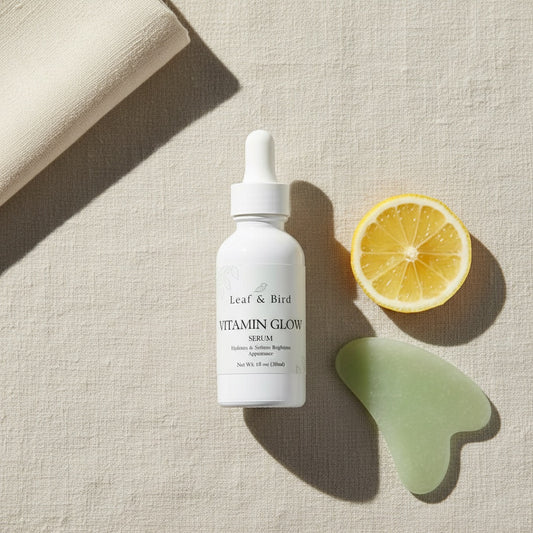
Vitamin Glow Serum
Regular price $24.90 USDRegular priceUnit price per -
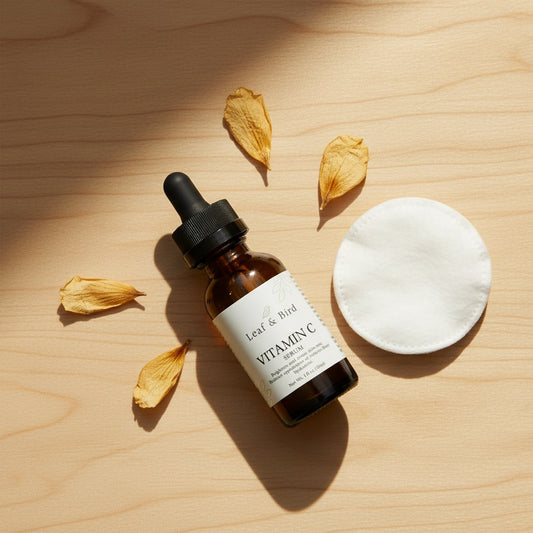
Vitamin C Serum
Regular price $20.00 USDRegular priceUnit price per -
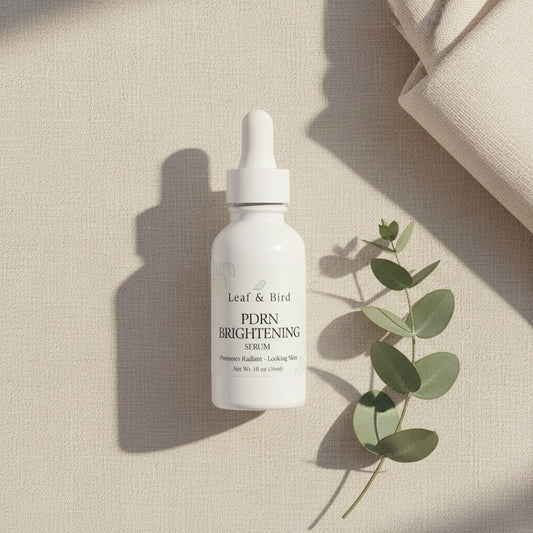
Vegan PDRN Brightening Serum
Regular price $32.00 USDRegular priceUnit price per



Why vitamin C irritates sensitive skin
Three separate causes, and they need different fixes.
Low pH
L-ascorbic acid is only stable and absorbable at a pH around 3.5. That acidity is what stings. Derivative forms are formulated at a pH much closer to skin's own, which removes the sting entirely for most people.
Concentration
The research sweet spot for L-ascorbic acid is 10 to 20 percent. Above that, irritation rises faster than benefit. Plenty of serums market 20 percent or higher as a selling point when it is closer to a warning for reactive skin.
Oxidation
Vitamin C degrades in light and air. An oxidized serum turns yellow, then brown, and the breakdown products are more irritating than the fresh formula. If your serum has darkened, that is not a cosmetic issue, it is a reason to replace it.
Which form to choose
3-O-ethyl ascorbic acid: the sensitive-skin default
A stabilized ether derivative that converts to ascorbic acid in the skin. It works at a near-neutral pH, does not sting, and holds up far better in the bottle. It is slightly slower to show results than pure L-ascorbic acid, which is a trade most reactive skin is happy to make. This is what our Vitamin Glow Serum uses.
Magnesium ascorbyl phosphate and ascorbyl glucoside
Both are water-soluble, gentle, and well tolerated. Weaker on their own, which is why they usually appear alongside another form.
L-ascorbic acid, buffered and blended
Still the strongest option if you tolerate it. Our Vitamin C Serum layers L-ascorbic acid with magnesium ascorbyl phosphate, 3-glyceryl ascorbate and ferulic acid, which roughly doubles the photoprotection and steadies the formula. Suitable for skin that is normal to resilient, not for skin that is actively reactive.
If vitamin C never works for you
Some people never get on with it. Vitamin C is not the only route to a more even tone. PDRN clears existing pigment through a different mechanism entirely and does not irritate, which makes it the honest alternative rather than a harder push of the same ingredient.
How to introduce it without a reaction
- Patch test for three nights on the jawline before it goes near your whole face.
- Start every third morning for two weeks, then every other, then daily. Most reactions come from starting daily on day one.
- Apply to dry skin, not damp. Damp skin increases penetration, which is helpful for hydrators and unhelpful for an acid.
- Buffer with moisturizer if it tingles. Moisturizer first, then serum, is a legitimate technique for reactive skin even though it slightly reduces potency.
- Do not stack it with an exfoliant in the same routine while you are still adjusting.
- Wear sunscreen. Vitamin C is a photoprotection multiplier, not a replacement for SPF.
What to expect, week by week
Gentle derivatives work more slowly than L-ascorbic acid, so knowing the shape of the curve stops you quitting early.
Week 1 to 2
Nothing visible. Antioxidant protection is working from the first application, but protection is invisible by definition. What you should notice is the absence of stinging, which tells you the form suits you.
Week 3 to 4
A general brightness shift that shows up in photographs before it shows up in the mirror. Skin looks slightly more awake in indirect light. Individual dark spots have not moved.
Week 6 to 8
Post-inflammatory marks, the darkening left behind by old spots, start to fade visibly. This is the first change most people can point at.
Week 10 to 12
Sun spots soften at the edges and overall tone reads more even. This is where the payoff sits, and it is also where most people have already stopped.
Photograph your starting point in consistent light. Gradual change is genuinely hard to see day to day, and the camera is more honest than memory.
Three things sensitive skin gets told that are wrong
"Sensitive skin cannot use vitamin C." It usually can. What it often cannot use is a 20 percent L-ascorbic acid serum at pH 3.2. Changing the form solves it for most people.
"Tingling means it is working." It does not. Tingling means the pH is low. Effectiveness comes from the ingredient reaching the skin in a stable form, not from sensation.
"Natural vitamin C from fruit extract is gentler." Fruit-derived vitamin C is present at concentrations far too low to do anything measurable. It is gentler because it is barely there.
Vitamin C Serum for Sensitive Skin: common questions
Which vitamin C is best for sensitive skin?
Why does my vitamin C serum burn?
Can I use vitamin C if I have rosacea or eczema?
Is vitamin C safe during pregnancy?
How long until I see results?
About This Collection
Every Leaf & Bird product is formulated with full ingredient transparency: real ingredients, real results, no compromises. Made in the USA without synthetic fragrances, artificial preservatives, or harsh chemicals.
Frequently Asked Questions
Find answers to common questions about our products, shipping, returns, and more.
Every product is formulated with full ingredient transparency. We use clean, natural ingredients. No synthetic fragrances, no artificial preservatives, no harsh chemicals. All products are made in the USA and come with a 30-day money-back guarantee.
Yes! All orders ship free within the United States. Orders are processed within 1-2 business days and typically arrive within 5-7 business days.
We offer a 30-day money-back guarantee on all products. If you're not completely satisfied, contact our support team and we'll issue a full refund. No questions asked.
Our products are formulated without harsh chemicals, synthetic fragrances, or artificial preservatives. We recommend a patch test before first use if you have known sensitivities. Our grass-fed tallow products are especially gentle.
For hydration & dry skin: Start with our Tallow Body Care collection. For brightening & anti-aging: Try our Vitamin C or Vitamin Glow serums. For deep pore cleansing: The Dead Sea Mud mask. For overnight repair: Sleep Plus Collagen Cream.
What Our Customers Are Saying
Clean Beauty That Works
I've been shopping with this brand for over a year now and the quality never disappoints. Every purchase has exceeded my expectations and their customer service is exceptional.
My Whole Routine in One Brand
I've been shopping with this brand for over a year now and the quality never disappoints. Every purchase has exceeded my expectations and their customer service is exceptional.
Finally, Transparent Ingredients
I've been shopping with this brand for over a year now and the quality never disappoints. Every purchase has exceeded my expectations and their customer service is exceptional.