

PDRN vs Retinol: Which Is Right for You?
-
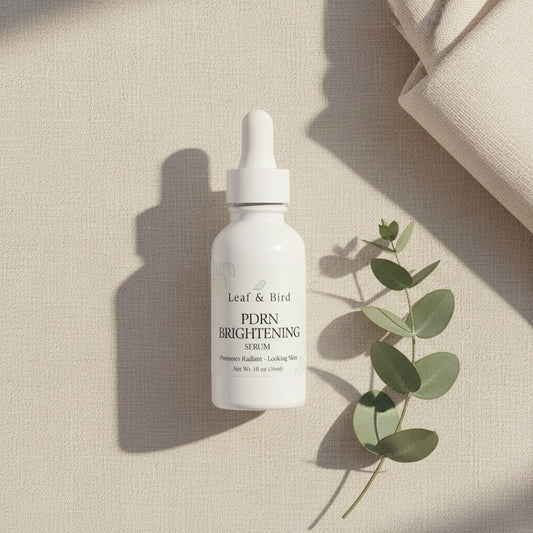
Vegan PDRN Brightening Serum
Regular price $32.00 USDRegular priceUnit price per -
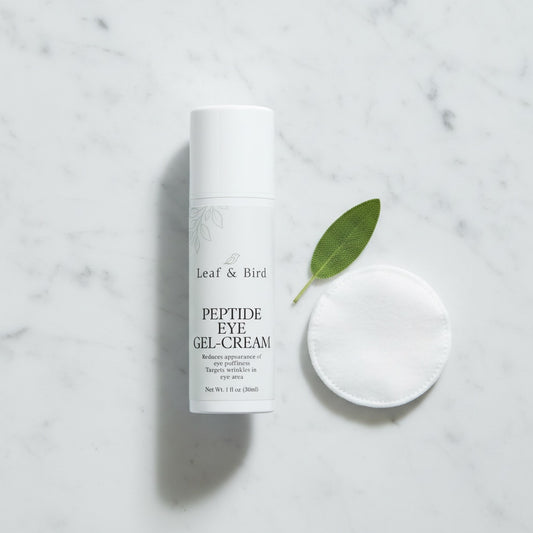
Peptide Eye Gel-Cream
Regular price $35.99 USDRegular priceUnit price per


PDRN vs Retinol at a glance
| PDRN | Retinol | |
|---|---|---|
| Mechanism | Polynucleotide fibroblast signaling | Vitamin A cellular turnover acceleration |
| Time to results | 4 to 8 weeks typical | 4 to 12 weeks (purge phase common) |
| Pregnancy-safe | Consult provider; no retinoids | Not recommended; avoid entirely |
| Sun sensitivity | None added | Increased; morning SPF required |
| Skin irritation risk | Low; barrier-supportive | Moderate to high; peeling common |
| Use frequency | AM + PM daily | PM only; start 2 to 3x per week |
| Cost per bottle | ~$32: $45 (30ml) | ~$15: $80 depending on concentration |
| Best for | Sensitive skin, pregnancy, clean routines | Established routines, acne scarring |
How each active actually works
PDRN: fibroblast activator + polynucleotide signal
PDRN, polydeoxyribonucleotide, is a bioactive polynucleotide fragment that acts as a signaling molecule for fibroblasts, the cells responsible for producing collagen and extracellular matrix proteins. When applied topically, PDRN is absorbed into the upper dermis where it activates adenosine A2A receptors on fibroblasts, stimulating collagen synthesis and supporting barrier repair. It's a build-up mechanism: PDRN doesn't force cellular turnover. It supports the skin's own structural production. This is why it carries essentially no irritation profile and why it can be used AM and PM from day one. Our formulation uses non-animal-sourced PDRN, not salmon-derived.
Retinol: vitamin A derivative and cellular turnover
Retinol is a vitamin A derivative that converts to retinoic acid in the skin. Retinoic acid binds to nuclear receptors that regulate gene expression, directly accelerating cellular turnover: old cells shed faster, new cells surface more quickly. This turnover mechanism is genuinely effective for improving texture, reducing acne, fading hyperpigmentation, and stimulating collagen indirectly. But acceleration has a cost: the skin purges as old cells shed ahead of schedule, and barrier function is temporarily compromised. Sun sensitivity increases meaningfully during retinol use because the fresh, thinner cells at the surface are more vulnerable to UV damage.
The key difference: irritation profile
PDRN builds; retinol accelerates. That distinction determines almost everything about who should use which. Retinol's cellular turnover mechanism requires a disruption phase. The barrier weakens before it strengthens, causing the peeling, redness, and sensitivity that makes many people abandon it in the first few weeks. PDRN does the opposite: it supports fibroblast activity and barrier repair simultaneously. No disruption phase, no sun-sensitization concern, no "retinol purge." For sensitive skin types, postpartum skin, or anyone who has tried retinol and found the trade-offs too high, PDRN offers a genuinely different path to the same structural goals.
Pros and cons of each
PDRN
Pros
- No irritation or disruption phase: can use AM + PM from day one
- Barrier-supportive; works well for sensitive, reactive, or postpartum skin
- No photosensitivity; no need to limit to PM use
- Safe profile during pregnancy (consult provider; no retinoids present)
- Vegan-sourced option available (non-salmon-derived)
Cons
- Smaller body of long-term clinical literature compared to retinol
- Results build gradually, not a fast-fix for severe texture issues
- Vegan PDRN is harder to find; most commercial options are salmon-derived
- Less established for acne-prone skin than retinol
Retinol
Pros
- Decades of clinical literature; among the most-studied topical actives
- Effective for acne, acne scarring, and rapid cell-turnover goals
- Wide availability and range of concentrations
- Well-established mechanism for collagen stimulation at higher concentrations
Cons
- Common irritation, peeling, and redness during introduction phase
- Increases sun sensitivity; must use SPF diligently
- Contraindicated during pregnancy and generally avoided during breastfeeding
- PM-only use limits routine flexibility
- Barrier disruption can worsen sensitive or reactive skin types short-term
Choose PDRN if… Choose retinol if…
Choose PDRN if you're pregnant or recently postpartum and need to skip retinoids; if you've tried retinol and experienced too much irritation, peeling, or photosensitivity to continue; if you have sensitive, reactive, or hormonally disrupted skin that struggles with disruption-phase actives; or if clean, vegan formulation is a non-negotiable and you want the assurance of a non-salmon, non-animal-sourced ingredient. PDRN is also the right call if you want to use an anti-aging active both morning and evening without sun-sensitivity concerns.
Choose retinol if you have acne-prone skin with scarring and need the turnover mechanism retinol is uniquely suited to address; if you have established, non-sensitive skin that tolerates the disruption phase without issue; if you want the weight of a decades-long clinical literature behind your active; or if cost is a significant factor and you don't need the vegan sourcing that makes PDRN more expensive. Retinol at the right concentration, used correctly with SPF, remains one of the most effective anti-aging actives available. We're not suggesting otherwise.
Why our PDRN sits in this comparison honestly
We sell PDRN. We don't sell retinol. That bias is obvious, and we want to name it directly rather than let it hide behind the appearance of objectivity.
We built this comparison because we believe the honest answer, that retinol is genuinely effective and that PDRN is a better first-line choice for a specific type of person, serves our customers better than a comparison that dismisses retinol to make our ingredient look better by contrast. The clean-beauty skeptics who make up our core audience are smart enough to see through that, and they deserve a source they can actually trust.
Our position: if you are pregnant, postpartum, sensitive-skinned, or clean-beauty committed and have been avoiding retinol for any of those reasons, our vegan PDRN serum is likely the better fit for your goals. If none of those apply and you have tolerant skin, retinol remains a defensible choice. The two can even coexist. Many customers use our PDRN serum in the morning and retinol at night. If you want the longer read on why we personally moved off retinol for pregnancy and sensitive skin, see why we stopped using retinol. We'd just rather you know the full picture before you decide.
PDRN vs Retinol: common questions
Can I use PDRN and retinol together?
If I switch from retinol to PDRN, what changes?
Which is more expensive over a year of use?
Is PDRN safer for sensitive skin than retinol?
If I'm not pregnant, is retinol still 'worse' than PDRN? Be honest.
How long should I try PDRN before judging if it's working?
About This Collection
Every Leaf & Bird product is formulated with full ingredient transparency: real ingredients, real results, no compromises. Made in the USA without synthetic fragrances, artificial preservatives, or harsh chemicals.
Frequently Asked Questions
Find answers to common questions about our products, shipping, returns, and more.
Every product is formulated with full ingredient transparency. We use clean, natural ingredients. No synthetic fragrances, no artificial preservatives, no harsh chemicals. All products are made in the USA and come with a 30-day money-back guarantee.
Yes! All orders ship free within the United States. Orders are processed within 1-2 business days and typically arrive within 5-7 business days.
We offer a 30-day money-back guarantee on all products. If you're not completely satisfied, contact our support team and we'll issue a full refund. No questions asked.
Our products are formulated without harsh chemicals, synthetic fragrances, or artificial preservatives. We recommend a patch test before first use if you have known sensitivities. Our grass-fed tallow products are especially gentle.
For hydration & dry skin: Start with our Tallow Body Care collection. For brightening & anti-aging: Try our Vitamin C or Vitamin Glow serums. For deep pore cleansing: The Dead Sea Mud mask. For overnight repair: Sleep Plus Collagen Cream.
What Our Customers Are Saying
Clean Beauty That Works
I've been shopping with this brand for over a year now and the quality never disappoints. Every purchase has exceeded my expectations and their customer service is exceptional.
My Whole Routine in One Brand
I've been shopping with this brand for over a year now and the quality never disappoints. Every purchase has exceeded my expectations and their customer service is exceptional.
Finally, Transparent Ingredients
I've been shopping with this brand for over a year now and the quality never disappoints. Every purchase has exceeded my expectations and their customer service is exceptional.